

Core View: Rising bond yields do not necessarily spell an immediate end to equity market gains. The critical question is: at what level do rising yields begin to force a repricing of equities?
Since the start of 2026, a notable shift has been unfolding in the US rates market: long-term Treasury yields have risen materially faster than the market had previously anticipated, yet equity markets have remained relatively resilient.
As of 26 August, the US 10-year Treasury yield stood at approximately 4.64% to 4.70%, while the 30-year Treasury yield was approximately 5.18% to 5.23%. At its recent peak, the 30-year yield briefly touched approximately 5.33%, its highest level since 2007.
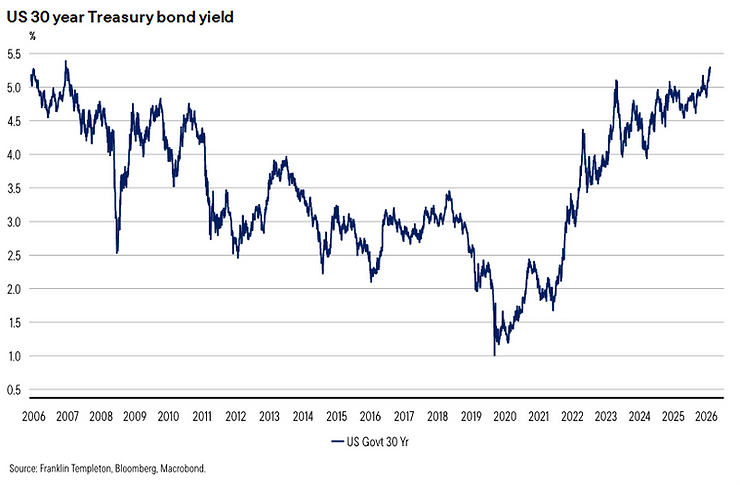
Meanwhile, the S&P 500 remains up approximately 12% year-to-date, not far from its all-time highs.
This has created a particularly compelling market divergence:
The bond market is becoming increasingly cautious, while equity markets continue to place their faith in economic growth and corporate earnings.
The question therefore becomes:
How much longer can this divergence between equities and bonds persist?
I. The Most Important Development This Year Is Not Rate Cuts — It Is Persistently Elevated Long-Term Rates
Since the beginning of the year, US Treasury yields have shifted meaningfully higher across the curve. The 10-year yield has risen from approximately 4.11% at the start of the year to around 4.7% more recently, an increase of nearly 60 basis points. The 30-year yield has broken through 5%, briefly reaching approximately 5.33%. The 30-year sector in particular warrants close attention.
Short-term rates are primarily influenced by central bank monetary policy, whereas 10-, 20-, and 30-year Treasury yields more broadly reflect the market's collective assessment of future inflation, economic growth, fiscal deficits, Treasury supply, and long-term risk premia.
Accordingly, the 30-year yield breaking through 5% carries a significance beyond simply